Prehistoric builders transported Devil's Arrows 11 miles
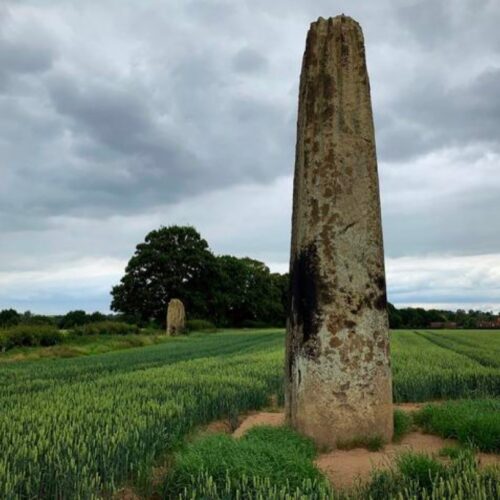
At a glance
Stonehenge is the most famous example of megalithic architecture across Britain and Ireland, but there are plenty of others, including Calanais, Newgrange, and Avebury, as well as the Devil's Arrows. The latter is Britain's tallest standing stone alignment, yet little is known about the provenance of its stones. Scient
- Primary source
- Ars Technica — Read original article
- Published
- Topic
- General
Stonehenge is the most famous example of megalithic architecture across Britain and Ireland, but there are plenty of others, including Calanais, Newgrange, and Avebury, as well as the Devil's Arrows.
The latter is Britain's tallest standing stone alignment, yet little is known about the provenance of its stones.
Scientists have confirmed that the stones came from a site 18 kilometers (11 miles) away, transported by humans rather than glacial movement, according to a paper published in the Proceedings of the Royal Society A: Mathematical, Physical and Engineering Sciences.
"Sites in southern England and Scotland receive considerable attention but monuments like the Devil's Arrows have remained comparatively understudied despite their significance," said co-author Jim Leary of the University of York.
"We have now proved that Neolithic communities moved several 25-ton stones across Yorkshire, transforming a familiar site into an epic quest to create a sacred landscape." Stonehenge has been the focus of recent chemical analyses identifying where all the stones that make up the structure came from, revealing that many originated in quarries a significant distance away.
For instance, a 2
This summary comes from Ars Technica. Read the full article at the original source.