Ladybird browser's first downloadable alpha is surprisingly capable
At a glance
Note: At the time of writing, I was unaware of criticism directed at Ladybird creator Andreas Kling’s public statements. Readers interested in this background can find further context in accounts by Kelson Vibber and Drew DeVault . After four years of work to build a browser engine from scratch, the Ladybird project re
- Primary source
- Ars Technica — Read original article
- Published
- Topic
- General
Note: At the time of writing, I was unaware of criticism directed at Ladybird creator Andreas Kling’s public statements. Readers interested in this background can find further context in accounts by Kelson Vibber and Drew DeVault .
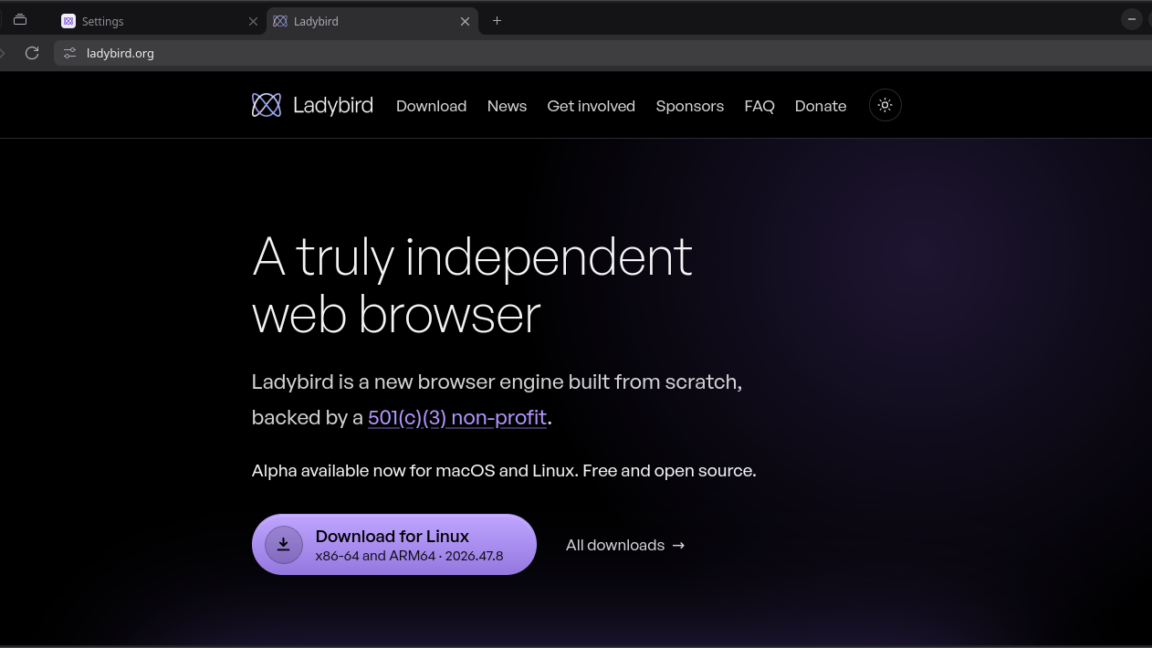
After four years of work to build a browser engine from scratch, the Ladybird project released its first downloadable alpha on November 23, offering prebuilt versions for macOS and Linux.
Previously, curious users had to compile the browser themselves from its source. Now it's an installable package with automatic updating.
Ladybird is most notable for what it isn't: another browser fork. Where Chrome, Edge, Brave, and Opera all run on Google's Blink engine, and Firefox depends on Gecko, Ladybird's rendering engine and its LibJS JavaScript engine were written from scratch.
"The engine is our own, built from the ground up, and not a fork," project lead Andreas Kling wrote in Monday's announcement. "The browser around it is modest, but functional." Read full article Comments
This summary comes from Ars Technica. Read the full article at the original source.