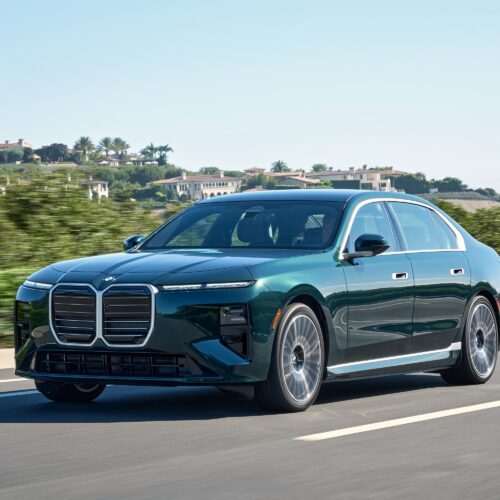
BMW bumps battery for the better: The 2027 i7 60 xDrive, driven
At a glance
BMW provided flights from Washington, DC, to Los Angeles and accommodation so Ars could drive the 2027 i7 as well as the 2027 iX5 and X5. Ars does not accept paid editorial content. When BMW debuted the new 7 Series in 2022, it set a new standard for large luxury sedans, increasingly irrelevant though that class is. Ra
- Primary source
- Ars Technica — Read original article
- Published
- Topic
- General
BMW provided flights from Washington, DC, to Los Angeles and accommodation so Ars could drive the 2027 i7 as well as the 2027 iX5 and X5. Ars does not accept paid editorial content.
When BMW debuted the new 7 Series in 2022, it set a new standard for large luxury sedans, increasingly irrelevant though that class is.
Rather than siloing off an electric alternative like Mercedes, with its EQS alongside the normal S-Class, BMW simply made the powertrain an option.
Stick with a V8 if you want, or consider the rather good electric version instead—only subtle differences like the badging and lack of exhaust pipes give the game away.
Since then, BMW has brought out a string of even newer electric vehicles for the 5 and 3 Series (plus their SUV counterparts). It has switched from battery packs made of prismatic cells to more energy-dense arrangements of cylindrical cells.
The motors are still electrically excited synchronous ones, but now the drive units feature silicon carbide inverters and more compact packaging.
This sixth-generation electric powertrain was designed for the clean-sheet Neue Klasse family, which also threw out the legacy cruft of dozens and dozens of discrete single-func
This summary comes from Ars Technica. Read the full article at the original source.