Contenido en inglés
Woman's brain worm infection confirmed after eggs grow tails in lab test
En resumen
Out of nowhere, a woman's right arm and leg started shaking uncontrollably. In the moments leading up to the experience, she seemed well; she had no headache, confusion, or weakness. But for about a minute, half of her body juddered. The woman, a rice farmer in the Philippines, headed to the emergency department. There
- Fuente primaria
- Ars Technica — Leer artículo original
- Publicado
- Tema
- Internacional
Out of nowhere, a woman's right arm and leg started shaking uncontrollably. In the moments leading up to the experience, she seemed well; she had no headache, confusion, or weakness.
But for about a minute, half of her body juddered. The woman, a rice farmer in the Philippines, headed to the emergency department.
There, doctors gave her a physical exam and found nothing out of the ordinary. Then they took a look at her brain.
Magnetic resonance imaging revealed a bright cluster of nodules surrounded by fluid in her left frontal lobe. The doctors had an immediate guess as to what they were: worm eggs.
An MRI of the woman's brain showing nodules.
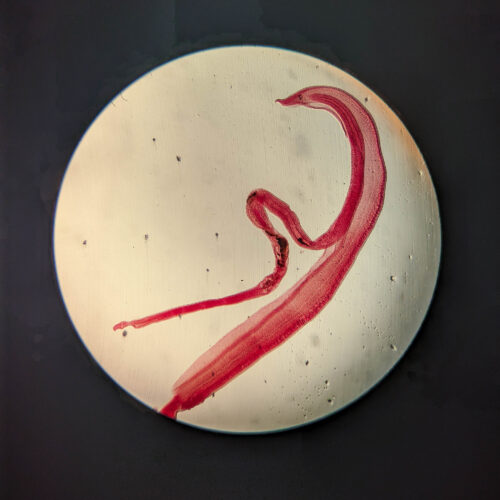
Credit: NEJM, 2026 In a case report published in the latest issue of the New England Journal of Medicine , doctors write that they suspected the woman had neuroschistosomiasis, an uncommon complication of an infection with a Schistosoma parasitic worm, aka a blood fluke.
In the Philippines, the most common fluke is S. japonicum . It's also found in China and part of Indonesia; despite its name, it has been eliminated from Japan.
Read full article Comments
Este resumen proviene de Ars Technica. Lee el artículo completo en la fuente original.