Contenido en inglés
Study: Dinosaurs were charbroiled after Chicxulub impact
En resumen
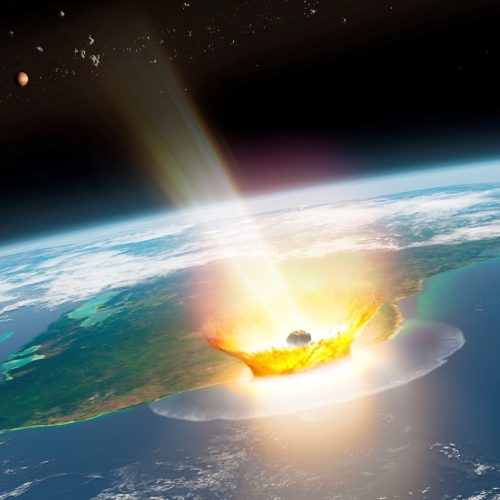
Some 66 million years ago, an asteroid impact wiped out three-quarters of all plant and animal species on Earth, most notably taking down the dinosaurs. But exactly how that impact caused those extinctions has been the subject of fierce debate. According to a new paper published in the Journal of Geophysical Research:
- Fuente primaria
- Ars Technica - All content — Leer artículo original
- Publicado
- Tema
- General
Some 66 million years ago, an asteroid impact wiped out three-quarters of all plant and animal species on Earth, most notably taking down the dinosaurs. But exactly how that impact caused those extinctions has been the subject of fierce debate.
According to a new paper published in the Journal of Geophysical Research: Biogeosciences, the impact would have produced an immense cloud of dust that superheated the upper atmosphere, charbroiling living organisms unable to take shelter and igniting widespread wildfires.
As previously reported , the most widely accepted explanation for what triggered that catastrophic mass extinction is known as the “ Alvarez hypothesis ,” after the late physicist Luis Alvarez and his geologist son, Walter.
In 1980, they proposed that the extinction event may have been caused by a massive asteroid or comet hitting the Earth.
They based this conclusion on their analysis of sedimentary layers at the Cretaceous-Paleogene boundary (the K-Pg boundary, formerly known as the K-T boundary) found all over the world, which included unusually high concentrations of iridium—a metal more commonly found in asteroids than on Earth.
(That same year, Dutch geophysicist Jan
Este resumen proviene de Ars Technica - All content. Lee el artículo completo en la fuente original.
Referencias
Más en General

Desciende a nivel 0 el incendio forestal de Seseña (Toledo)
Toledo, 1 ago (EFE).- El Servicio de Prevención y Extinción de Incendios Forestales de Castilla-La Mancha (Infocam) ha rebajado a situación operativa nivel 0 un incendio forestal…

El gobernador de California, Gavin Newsom , transita los últimos meses en el cargo , ya que asumió en enero de 2019 y finaliza su labor el 4 de enero de 2027, tras la reelección…

Ecolocalización: cómo murciélagos, delfines y humanos usan el sonido para orientarse
Murciélagos, delfines y humanos comparten una habilidad que desafía los límites de la percepción: la capacidad de “ver” el mundo a través del sonido . La ecolocalización —el…

Sancionaron a un conductor que circuló más de un kilómetro por la banquina de la autopista Buenos Aires-La Plata
Un conductor de un Fiat Palio fue interceptado y sancionado por agentes del Ministerio de Transporte de la Provincia de Buenos Aires tras circular durante más de un kilómetro por…