Contenido en inglés
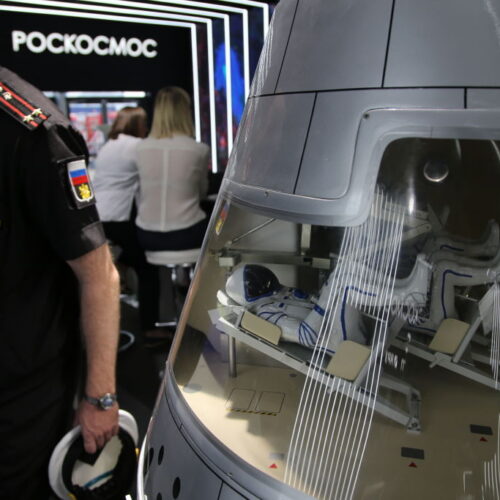
So what's happening with Russia's new, long-delayed crewed spacecraft?
En resumen
In what seems like an alternate universe in hindsight, Russia and the European Space Agency began discussing collaboration on next-generation crewed spacecraft two decades ago. Under the agreement , Europe would have provided a service module to power a crew capsule carrying up to six passengers. Europe ultimately deci
- Fuente primaria
- Ars Technica — Leer artículo original
- Publicado
- Tema
- General
In what seems like an alternate universe in hindsight, Russia and the European Space Agency began discussing collaboration on next-generation crewed spacecraft two decades ago.
Under the agreement , Europe would have provided a service module to power a crew capsule carrying up to six passengers.
Europe ultimately decided not to pursue a crewed spacecraft project at the time, and Russia's state-backed space corporation, Roscosmos, chose to move ahead with a crewed spacecraft on its own.
This project—always seemingly more of a Potemkin village than an effort encompassing real hardware—has gone under various guises over the years: PPTS (Perspektivnaya Pilotiruemaya Transportnaya Sistema / Prospective Piloted Transport System): The initial conceptual project name used in 2009 PTK NP (Pilotiruyemy Transportny Korabl Novogo Pokoleniya / New Generation Piloted Transport Ship): The official technical designation used until 2016 Federatsiya (Federation): The official name chosen following a public contest and announced in January 2016 Orel / Oryol (Eagle) : A new name adopted in September 2019 when Roscosmos was under the control of Dmitry Rogozin Actual hardware tests, maybe?
Beyond the n
Este resumen proviene de Ars Technica. Lee el artículo completo en la fuente original.
